

Get Consultation for Root Canal Treatment
Tooth pain, lingering sensitivity, swelling, or deep decay sometimes points to inflammation or infection inside a tooth. Root canal treatment removes affected pulp, cleans the internal canal spaces, and seals them.
At The Good Dentists Group, our team can consult with you to plan your procedure. This could be starting with your symptoms, dental history, examination findings, and X-rays where clinically indicated. Some teeth need a different treatment or referral to an endodontist.
DISCUSS YOUR OPTIONS
When Root Canal Treatment Might Be Considered
A dentist might discuss root canal treatment when the pulp is inflamed, infected, or no longer healthy. Causes include deep decay, cracks, trauma, or previous dental work.
Symptoms sometimes include:
- Persistent toothache
- Pain when biting
- Sensitivity to hot or cold
- Swelling around a tooth or gum
- A pimple-like swelling on the gum
- Tooth darkening after trauma
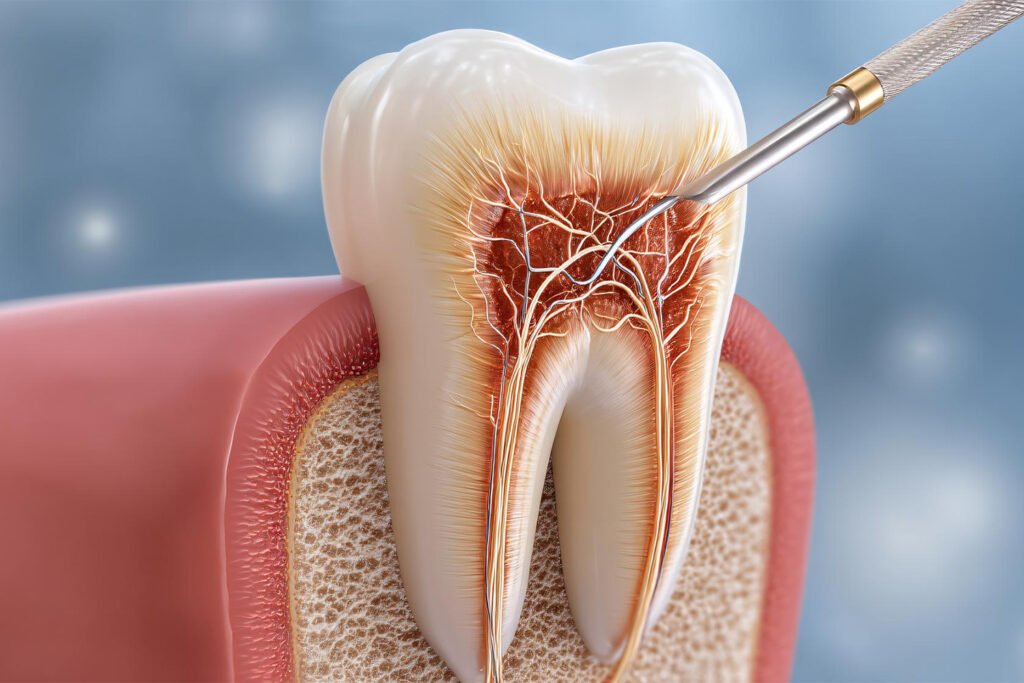

What Root Canal Treatment Involves
To bein with, the dentist creates access into the tooth, removes affected pulp tissue, then cleans and shapes the canal spaces.
Some cases need more than one appointment. Medication might be placed inside the tooth between visits, followed by a temporary restoration. Visit numbers depend on infection, anatomy, symptoms, and treatment complexity. Once cleaning is complete, the canals are filled and sealed. A final restoration is then planned to protect the remaining tooth structure.
Why a Crown or Other Restoration Might Be Discussed
A root-filled tooth often has reduced structure because of decay, fracture, or previous restorations. A crown, onlay, or another restoration might be recommended according to tooth position, remaining structure, bite forces, cracks, and existing dental work.
A crown is not required in every case and materials as well as shades are selected according to clinical need and nearby teeth where appearance matters.

Possible Risks and Limitations
Root canal treatment has recognised limitations and risks. These include post-treatment tenderness, persistent infection, difficulty cleaning narrow canals, instrument separation, perforation, fracture, or reinfection.
Some teeth do not heal as expected. Retreatment, specialist endodontic care, surgery, or extraction might then be discussed.
No specific treatment lifespan or outcome is promised. Tooth condition, anatomy, oral hygiene, bite forces, health factors, and follow-up care could influence results.
Caring for Your Tooth After Treatment
Your mouth might remain numb for several hours after local anaesthetic. Avoid chewing on the numb side until normal sensation returns.
A temporary restoration needs care between appointments. Avoid hard or sticky foods on the treated tooth until your dentist advises otherwise.
After treatment:
- Brush twice daily with fluoride toothpaste
- Clean between teeth each day
- Follow medicine instructions
- Attend planned reviews
- Avoid chewing hard objects
- Contact the clinic if swelling, severe pain, or loss of a temporary filling occurs
Need a Root Canal Consultation in Bayswater?
If you have ongoing tooth pain, swelling, sensitivity, or concerns about an infected tooth, arrange an assessment at The Good Dentists Group in Bayswater.
The clinic currently operates from 5/63 Stud Road, Bayswater, Victoria 3153.
Frequently Asked Questions
No. Visit numbers differ between cases. Tooth anatomy, infection, symptoms, and complexity affect the schedule.
Local anaesthetic is used to manage discomfort. Experiences differ, and tenderness sometimes occurs afterwards.
No. The final restoration depends on tooth position, remaining structure, cracks, bite forces, and other findings.
Your dentist might discuss monitoring, retreatment, specialist referral, surgery, or extraction.
There is no fixed lifespan. Long-term survival depends on tooth condition, restoration, oral hygiene, bite forces, and ongoing care.