
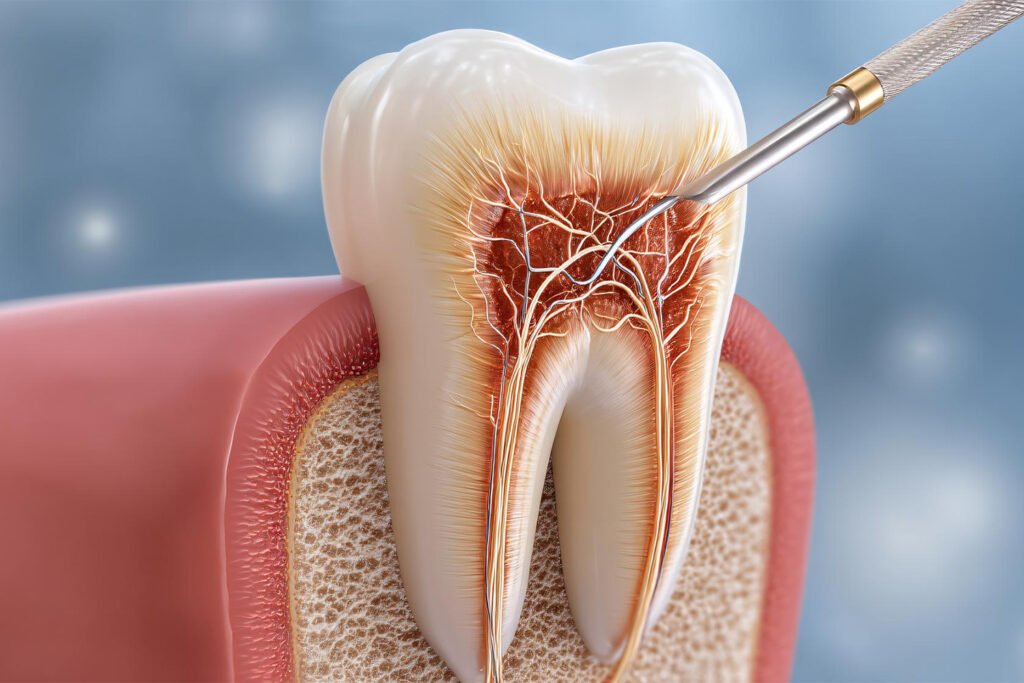
Tooth discomfort can occur for many reasons, ranging from minor sensitivity to more significant dental concerns. At times, persistent discomfort can be a sign that the tooth’s inner tissue, called the pulp, is inflamed or infected.
When this occurs, a dentist may recommend root canal treatment to help manage the infection and preserve the natural tooth where appropriate.
Identifying early root canal symptoms can allow you to get dental advice promptly, preventing further deterioration.
What Is Root Canal Treatment?
Root canal therapy is a procedure where a dentist removes the infected or damaged tissue from the interior of a tooth. The pulp is a soft tissue inside the tooth that houses nerves and blood vessels, playing a crucial role in the tooth’s growth and development.
When the pulp becomes affected by deep decay, trauma, cracks, or bacterial infection, it may lead to discomfort and other symptoms. Root canal treatment aims to clean the affected area, reduce infection, and help retain the natural tooth structure when clinically appropriate.
Not every toothache means you need a root canal, but certain symptoms may indicate that further assessment is warranted.
1. Persistent Tooth Pain
One of the most common signs associated with a potential tooth nerve infection is ongoing tooth pain.
The discomfort may:
- Occur while eating or drinking
- Develop without an obvious cause
- Feel sharp, throbbing, or dull
- Come and go throughout the day
- Become more noticeable when lying down
Tooth pain can have many causes, so a dental examination is needed to determine the underlying reason.
2. Increased Sensitivity to Hot or Cold
Sensitivity to hot or cold foods and drinks is relatively common. However, sensitivity that lingers long after the stimulus has been removed may indicate irritation or damage within the tooth.
For example, you may notice discomfort that continues for several seconds or minutes after drinking coffee or eating ice cream.
Persistent temperature sensitivity is one of the root canal symptoms that may require professional assessment.
3. Swelling Around the Tooth or Gums
Swelling near a tooth can sometimes indicate infection.
You may notice:
- Tender gums around the affected tooth
- Localised swelling
- A small pimple-like bump on the gum
- Discomfort when touching the area
Swelling should always be assessed by a dental professional, particularly if it is accompanied by pain or changes in the surrounding tissues.
4. Tooth Discolouration
A tooth that becomes darker than neighbouring teeth may indicate changes occurring within the tooth structure.
Although tooth discoloration can have many causes, damage inside the pulp may sometimes lead to a tooth turning grey, brown, or darker.
If you notice an unexplained colour change in a tooth, it may be worth discussing with your dentist.
5. Pain When Biting or Applying Pressure
If you experience discomfort when chewing or biting down, it may suggest that the tissues surrounding the tooth are inflamed.
This symptom can occur when infection or inflammation extends beyond the tooth and affects the supporting structures.
Experiencing discomfort when biting down is one of the signs that might lead your dentist to explore whether a root canal is needed.
Why Early Assessment Is Important
It’s crucial to understand that dental infections rarely resolve on their own and usually require. Delaying assessment may allow the condition to progress, potentially affecting surrounding tissues and increasing treatment complexity.
Seeking professional advice when symptoms first appear may help your dentist identify the issue and discuss appropriate management options.
Final Thoughts
Symptoms such as ongoing tooth pain, prolonged sensitivity, swelling, discolouration, or discomfort when biting may indicate that a tooth requires professional assessment.
While these signs do not always mean root canal treatment is necessary, they may be associated with a tooth nerve infection or other dental concerns that warrant investigation.
If you’re experiencing any of these symptoms and are looking for a solution, consider scheduling a consultation for a root canal in Melbourne with The Good Dentists. Our team can assess your oral health, identify the cause of your symptoms, and discuss appropriate treatment options based on your individual needs.
FAQs
You may notice signs like constant tooth pain, lingering sensitivity to heat or cold, swelling around the gums, a tooth becoming darker, or discomfort when biting down. Each of these can signal a deeper issue.
Not necessarily. Tooth sensitivity can occur for various reasons, including enamel wear, gum recession, or tooth decay. A thorough dental evaluation is necessary to identify the root cause.
Dental infections generally require professional assessment and treatment. If left unaddressed, the condition may progress and affect surrounding tissues.
Modern dental techniques and anaesthesia are designed to help keep patients comfortable during treatment. Your dentist can discuss what to expect based on your individual situation.
Persistent pain, swelling, sensitivity, or any noticeable changes in a tooth should be assessed by a dental professional to determine the underlying cause and appropriate management options.
Recent Posts
- All Posts
- Blog

A toothache has a knack for showing up at the worst possible time. It might start on Saturday night, just...

It’s Sunday morning, and you’ve woken up with a throbbing tooth. Or perhaps you’ve noticed swelling around your gums that...

A dental filling is commonly used to repair a tooth affected by decay or certain types of damage. But how...